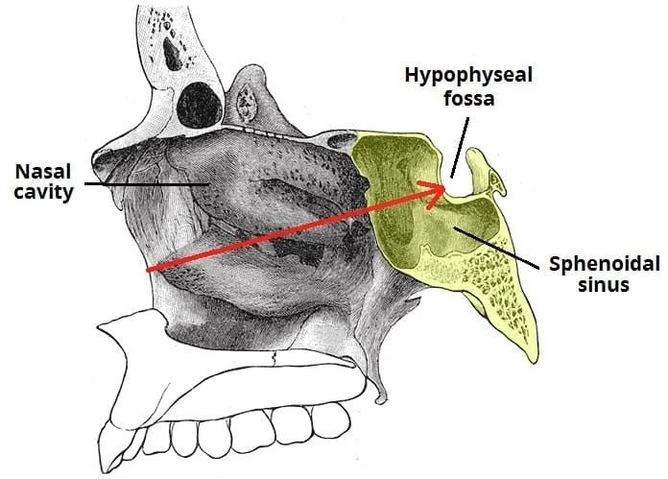
The transsphenoidal approach to pituitary surgery provides a minimally invasive route to access the pituitary gland through the sphenoid sinus. This pathway avoids brain retraction, reducing complications while allowing tumor removal or cyst drainage. Surgeons navigate near the optic chiasm, cavernous sinus, and carotid arteries, requiring precise anatomical knowledge. Endoscopic techniques enhance visualization and accuracy. This approach is commonly used to treat pituitary adenomas, Rathkes cleft cysts, or hormone-secreting tumors. Understanding the sphenoid sinus anatomy, sellar floor, and surrounding neurovascular structures ensures safe intervention, preserves hormonal function, and minimizes risk of cerebrospinal fluid leaks, visual impairment, or vascular injury. Transsphenoid Approach to Pituitary Surgery Diagram - Chart - diagrams and charts with labels. This diagram depicts Transsphenoid Approach to Pituitary Surgery and explains the details of Transsphenoid Approach to Pituitary Surgery.
Transsphenoid Approach to Pituitary Surgery