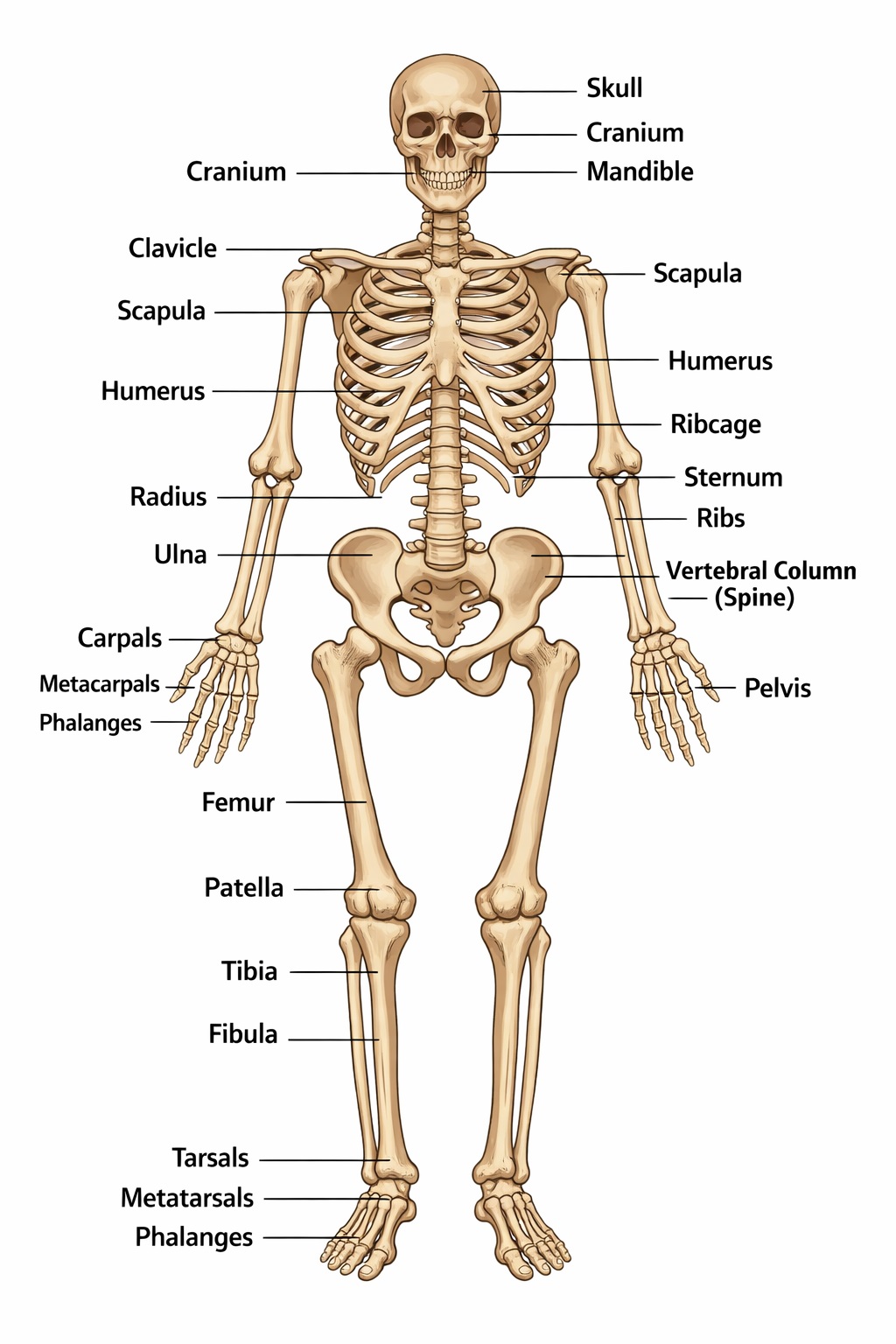
The human skeletal system diagram shows the full structure of bones that support, protect, and shape the body. At the top, the skull protects the brain and forms the face, while the jaw (mandible) allows for chewing and speaking. Moving down, the clavicle and scapula connect the arms to the body, and the rib cage, along with the sternum, shields vital organs like the heart and lungs. The vertebral column, or spine, runs through the center, providing both support and flexibility while protecting the spinal cord. This labeled skeletal system diagram makes it easy to understand how each bone fits together to create a strong but flexible framework. In the lower body, the pelvis supports the weight of the upper body and connects to the powerful femur, the longest bone in the body. The knee joint includes the patella, while the tibia and fibula form the lower leg, helping with movement and balance. The hands and feet contain smaller bones like carpals, metacarpals, tarsals, and phalanges, which allow for precise movements and stability. Overall, this human skeletal system diagram with labels is a helpful visual guide for students, educators, and anyone interested in anatomy, showing how bones work together to support motion, protect organs, and maintain body structure. Human Skeletal System Diagram Diagram - Chart - diagrams and charts with labels. This diagram depicts Human Skeletal System Diagram and explains the details of Human Skeletal System Diagram.
Human Skeletal System Diagram