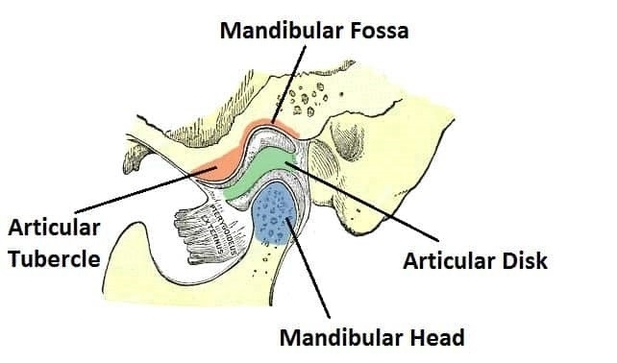
The bony surfaces of the temporomandibular joint include the mandibular condyle and the temporal bones articular fossa, forming a hinge and sliding joint. These surfaces allow jaw movements such as opening, closing, and lateral motion. Knowledge of TMJ anatomy is important for dentists, maxillofacial surgeons, and medical students in diagnosing disorders, planning surgery, and managing pain. Understanding bony articulations and landmarks ensures accurate treatment, preserves function, and supports rehabilitation in cases of trauma, arthritis, or TMJ dysfunction. boney surfaces of the temporomandibular joint Diagram - Chart - diagrams and charts with labels. This diagram depicts boney surfaces of the temporomandibular joint and explains the details of boney surfaces of the temporomandibular joint.
boney surfaces of the temporomandibular joint