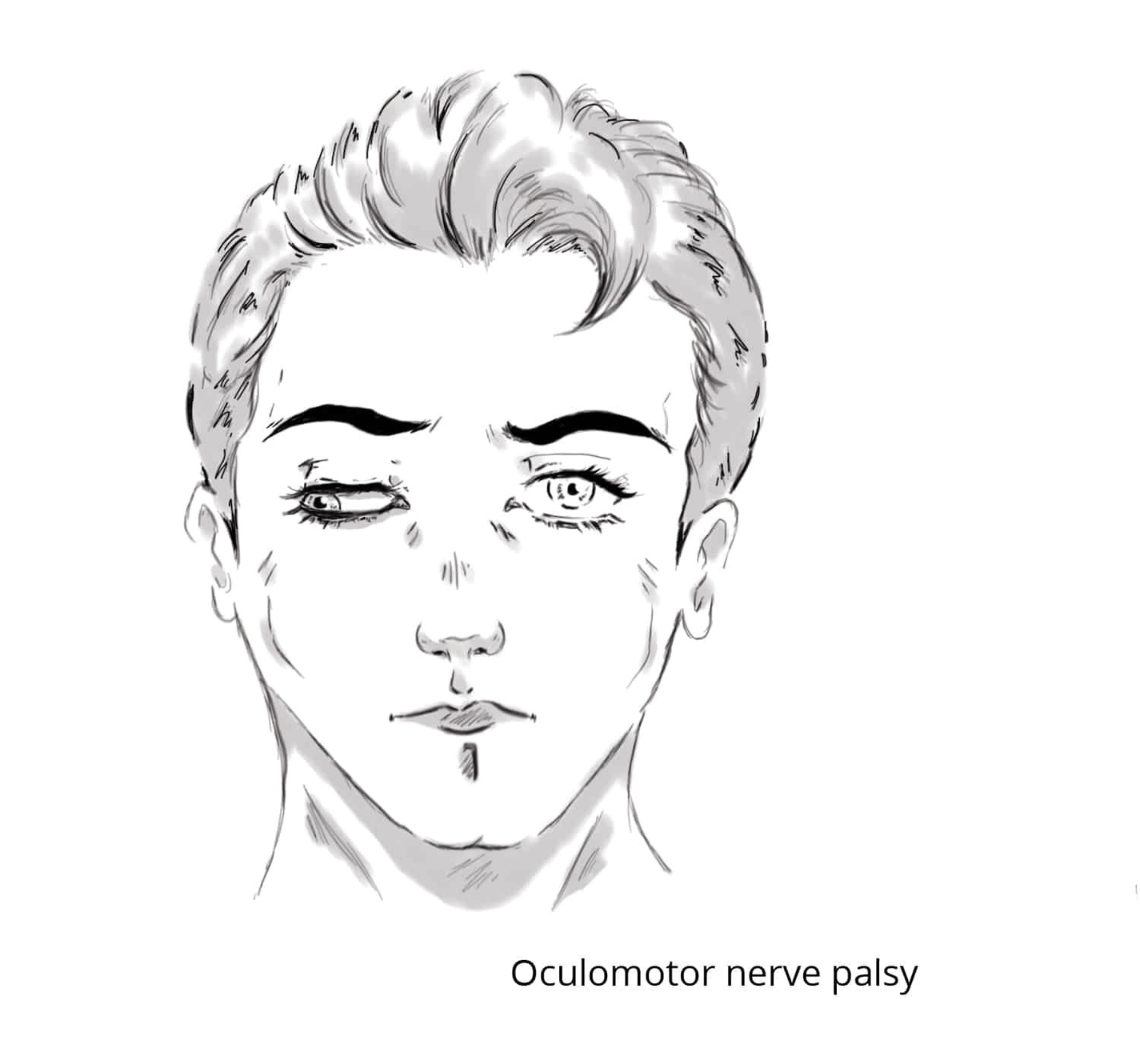
Oculomotor nerve palsy produces the classic down and out eye position because the muscles normally controlled by the oculomotor nerve lose their function, leaving only the lateral rectus and superior oblique muscles unopposed. As a result, the affected eye drifts laterally and slightly downward, often accompanied by ptosis due to paralysis of the levator palpebrae superioris. Patients may also develop double vision and a dilated pupil if the parasympathetic fibers of the nerve are involved. This presentation is important clinically because it can signal serious conditions such as aneurysms, trauma, or increased intracranial pressure that compress the nerve. Oculomotor Nerve Palsy Down and Out Position Diagram - Chart - diagrams and charts with labels. This diagram depicts Oculomotor Nerve Palsy Down and Out Position and explains the details of Oculomotor Nerve Palsy Down and Out Position.
Oculomotor Nerve Palsy Down and Out Position