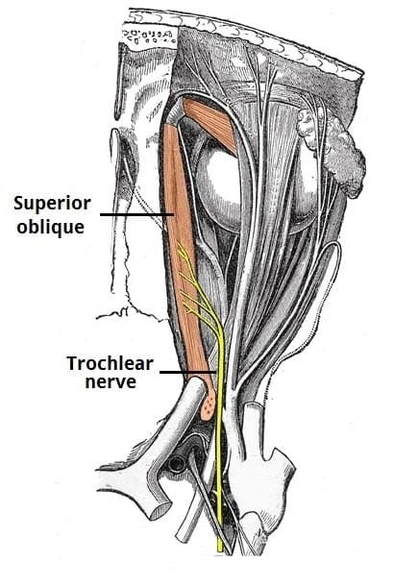
The trochlear nerve, or cranial nerve IV, innervates the superior oblique muscle, enabling the eye to move downward and inward. It is the only cranial nerve that emerges dorsally from the brainstem, and its long intracranial course makes it particularly vulnerable to trauma and compression. Injury to the trochlear nerve can result in vertical diplopia, head tilt, and difficulty reading or descending stairs. Clinicians rely on understanding its pathway to diagnose cranial nerve lesions, plan neurosurgical approaches, and manage orbital or brainstem injuries. Its small size and unique route require careful imaging interpretation and clinical assessment to ensure accurate diagnosis and effective treatment of ocular motor disorders. Trochlear Nerve and Superior Oblique Diagram - Chart - diagrams and charts with labels. This diagram depicts Trochlear Nerve and Superior Oblique and explains the details of Trochlear Nerve and Superior Oblique.
Trochlear Nerve and Superior Oblique