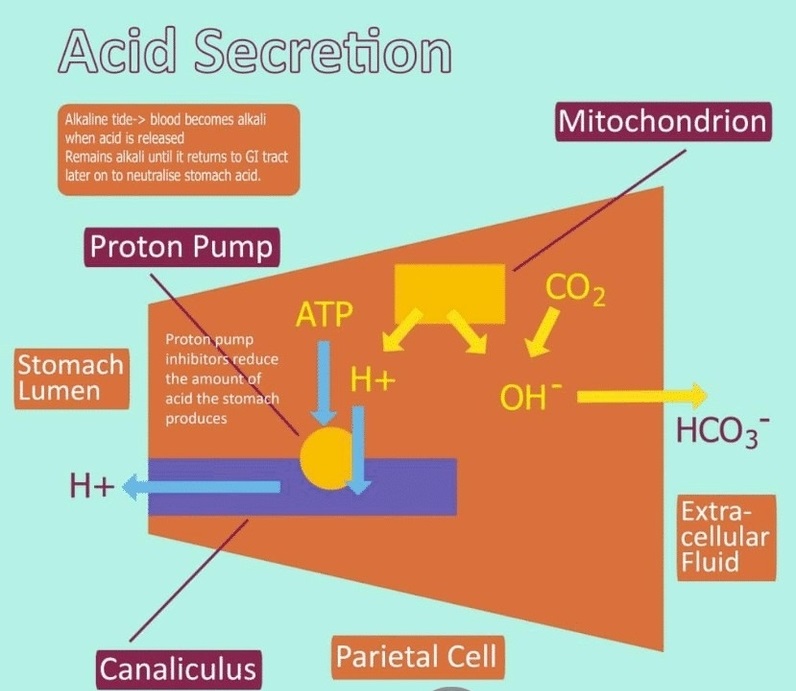
Gastric acid secretion is a vital physiological process that supports digestion and protects against ingested pathogens. This anatomy diagram of acid secretion illustrates the structure of the gastric glands and highlights the role of parietal cells in producing hydrochloric acid. It demonstrates how hydrogen ions are actively transported into the stomach lumen via the proton pump (H?/K? ATPase), while chloride ions follow to form hydrochloric acid. The diagram also shows regulatory influences from gastrin, histamine, and acetylcholine, as well as inhibitory pathways. Understanding acid secretion is essential for students studying peptic ulcer disease, gastroesophageal reflux disease (GERD), and the mechanism of action of proton pump inhibitors. This visual guide clearly connects cellular structure with digestive function and clinical relevance. Acid Secretion Diagram - Chart - diagrams and charts with labels. This diagram depicts Acid Secretion and explains the details of Acid Secretion.
Acid Secretion